Buy faden.eu ?
We are moving the project
faden.eu .
Are you interested in purchasing the domain
faden.eu ?
domain@kv-gmbh.de · 0541-91531010
Buy faden.eu ?
What happens during honing?
During honing, a honing stone with abrasive particles is passed back and forth over the surface of a workpiece. This process helps to remove any imperfections or irregularities on the surface, resulting in a smoother and more precise finish. Honing also helps to improve the geometry and accuracy of the workpiece, making it suitable for further finishing processes or assembly. **
What is a honing tool?
A honing tool is a precision tool used to improve the surface finish and accuracy of a workpiece. It is typically used in metalworking to create a smooth and precise surface on a part. Honing tools can be used to remove small imperfections, burrs, and irregularities left behind by other machining processes, resulting in a higher quality finished product. **


Similar search terms for Honing
Top-Angebote
Products related to Honing:



-
Is the cylinder bore honing still present?
Without physically inspecting the cylinder bore honing, it is difficult to determine if it is still present. However, if the engine has not been rebuilt or machined since the honing was done, it is likely that the cylinder bore honing is still present. Over time and with use, the honing marks may become less pronounced, but they should still be visible to some extent. If there are concerns about the condition of the cylinder bore honing, it is best to have a professional mechanic inspect it. **
-
What is the difference between lapping and honing?
Lapping and honing are both abrasive machining processes used to improve the surface finish of a workpiece, but they differ in their techniques and objectives. Lapping involves rubbing two surfaces together with an abrasive slurry to achieve a high degree of flatness and surface finish. Honing, on the other hand, uses a set of abrasive stones that are pressed against the workpiece with controlled pressure and oscillating motion to create a precise and uniform surface finish. In summary, lapping is more focused on achieving flatness, while honing is geared towards achieving precise dimensions and surface finish. **
-
What is the difference between honing and reaming?
Honing is a finishing process that involves the use of abrasive stones to improve the surface finish and geometry of a hole, while reaming is a cutting process that enlarges and improves the accuracy of a hole using a multi-fluted cutting tool. Honing is typically used to achieve a precise surface finish and size tolerance, while reaming is primarily used to achieve a specific size and geometry of a hole. Additionally, honing is often done after drilling or boring operations, while reaming is typically done before honing to achieve the desired size and finish. **
-
What is embroidery thread?
Embroidery thread is a type of thread specifically designed for use in embroidery and other decorative stitching. It is typically made from cotton, silk, or synthetic materials and comes in a wide variety of colors and thicknesses. Embroidery thread is often stronger and more lustrous than regular sewing thread, making it ideal for creating intricate and detailed designs on fabric. It is commonly used in hand embroidery, machine embroidery, and other needlework projects. **


What is the difference between honing and sharpening a blade?
Honing a blade involves realigning the edge of the blade to restore its sharpness, while sharpening a blade involves removing material from the blade to create a new edge. Honing is typically done more frequently to maintain the blade's sharpness, while sharpening is done less frequently to restore a dull blade. Honing is often done with a honing steel or ceramic rod, while sharpening is done with a sharpening stone or electric sharpener. **
What sewing needle do I need for canvas? Do I need a specific thread for sewing an awning?
For sewing canvas, it is recommended to use a heavy-duty needle, such as a size 16 or 18, to ensure it can penetrate the thick fabric without breaking. As for sewing an awning, it is best to use a UV-resistant and weather-resistant thread, such as polyester or PTFE (Teflon), to ensure the longevity and durability of the awning. These threads are designed to withstand outdoor elements and provide a strong hold for the fabric. **
Top-Angebote
Products related to Honing:
-
What happens during honing?
During honing, a honing stone with abrasive particles is passed back and forth over the surface of a workpiece. This process helps to remove any imperfections or irregularities on the surface, resulting in a smoother and more precise finish. Honing also helps to improve the geometry and accuracy of the workpiece, making it suitable for further finishing processes or assembly. **
-
What is a honing tool?
A honing tool is a precision tool used to improve the surface finish and accuracy of a workpiece. It is typically used in metalworking to create a smooth and precise surface on a part. Honing tools can be used to remove small imperfections, burrs, and irregularities left behind by other machining processes, resulting in a higher quality finished product. **
-
Is the cylinder bore honing still present?
Without physically inspecting the cylinder bore honing, it is difficult to determine if it is still present. However, if the engine has not been rebuilt or machined since the honing was done, it is likely that the cylinder bore honing is still present. Over time and with use, the honing marks may become less pronounced, but they should still be visible to some extent. If there are concerns about the condition of the cylinder bore honing, it is best to have a professional mechanic inspect it. **
-
What is the difference between lapping and honing?
Lapping and honing are both abrasive machining processes used to improve the surface finish of a workpiece, but they differ in their techniques and objectives. Lapping involves rubbing two surfaces together with an abrasive slurry to achieve a high degree of flatness and surface finish. Honing, on the other hand, uses a set of abrasive stones that are pressed against the workpiece with controlled pressure and oscillating motion to create a precise and uniform surface finish. In summary, lapping is more focused on achieving flatness, while honing is geared towards achieving precise dimensions and surface finish. **
Similar search terms for Honing
-
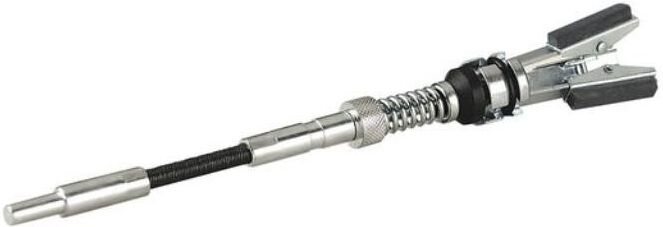
Condor werkzeug 5322 Honing ToolNumber of arms: 3; Opening width up to [mm]: 178; Opening width from [mm]: 51; Square Drive Tang Size [mm (inch)]: 6.3 (1/4); Packaging height [cm]: 6,00; Packaging width [cm]: 12,80; Drive [inch]: 1/4; Packaging length [cm]: 42,5043,99 £*Shipping: 8,45 £Secure redirect to the provider
-
What is the difference between honing and reaming?
Honing is a finishing process that involves the use of abrasive stones to improve the surface finish and geometry of a hole, while reaming is a cutting process that enlarges and improves the accuracy of a hole using a multi-fluted cutting tool. Honing is typically used to achieve a precise surface finish and size tolerance, while reaming is primarily used to achieve a specific size and geometry of a hole. Additionally, honing is often done after drilling or boring operations, while reaming is typically done before honing to achieve the desired size and finish. **
-
What is embroidery thread?
Embroidery thread is a type of thread specifically designed for use in embroidery and other decorative stitching. It is typically made from cotton, silk, or synthetic materials and comes in a wide variety of colors and thicknesses. Embroidery thread is often stronger and more lustrous than regular sewing thread, making it ideal for creating intricate and detailed designs on fabric. It is commonly used in hand embroidery, machine embroidery, and other needlework projects. **
-
What is the difference between honing and sharpening a blade?
Honing a blade involves realigning the edge of the blade to restore its sharpness, while sharpening a blade involves removing material from the blade to create a new edge. Honing is typically done more frequently to maintain the blade's sharpness, while sharpening is done less frequently to restore a dull blade. Honing is often done with a honing steel or ceramic rod, while sharpening is done with a sharpening stone or electric sharpener. **
-
What sewing needle do I need for canvas? Do I need a specific thread for sewing an awning?
For sewing canvas, it is recommended to use a heavy-duty needle, such as a size 16 or 18, to ensure it can penetrate the thick fabric without breaking. As for sewing an awning, it is best to use a UV-resistant and weather-resistant thread, such as polyester or PTFE (Teflon), to ensure the longevity and durability of the awning. These threads are designed to withstand outdoor elements and provide a strong hold for the fabric. **
* All prices are inclusive of VAT and, if applicable, plus shipping costs. The offer information is based on the details provided by the respective shop and is updated through automated processes. Real-time updates do not occur, so deviations can occur in individual cases. ** Note: Parts of this content were created by AI.